Boza and salep in Istanbul
Boza’s fermented tang and salep’s sweet, milky warmth: what to expect from Istanbul’s winter drinks, with a first boza stop at Vefa.
Before you go
- Choose
- Salep for a hot, milky drink; boza for a thick, fermented grain drink.
- Vefa stop
- Vefa Bozacısı, Vefa Caddesi 66, Fatih.
- Order
- Bir salep or bir boza; tarçın means cinnamon.
- Ingredients
- Salep usually contains milk. Ask about recipes and toppings.
Practical information checked:
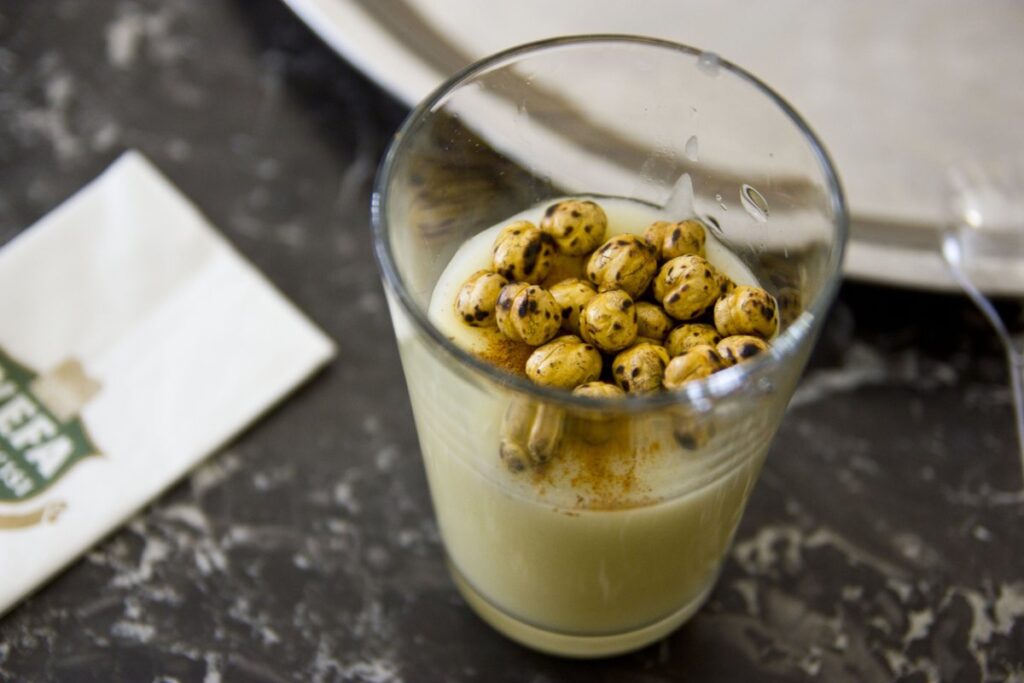
Boza at Vefa, November 2011.
Photo: William Neuheisel · Photo credits
Boza and salep: what is in the glass?
Boza and salep belong to Istanbul’s cold-weather food traditions, but they are quite different drinks. Salep is hot, sweet and milky, usually finished with cinnamon. Boza is thick and fermented, with a gently sour taste and accompaniments that can include cinnamon and roasted chickpeas. Their textures are as distinctive as their flavours.
Vefa Bozacısı gives boza a specific address and a family history stretching back to the nineteenth century. Salep is a drink to look for on a café’s seasonal menu, with recipes and mixtures that vary. Here is what to expect from each, and how to fit a first taste into your visit.
A glass of boza, and the story of a shop
Vefa’s story begins with a newcomer. According to the family business’s account, Hacı Sadık Bey arrived in Istanbul from Prizren in 1870 and developed a paler, thicker, only lightly sour boza than the versions then commonly sold. For six years he carried it through the city in copper vessels before opening the Vefa shop in September 1876.
The Vefa recipe uses millet semolina, water and sugar. Fermentation gives the drink its tang, and its thick texture makes a small serving satisfying. Start with one serving rather than buying bottles before you know whether you like it. Cinnamon and roasted chickpeas, leblebi, are familiar accompaniments, giving a contrast of spice and crunch.
Vefa Bozacısı is at Vefa Caddesi 66, Fatih. It fits into an outing around Süleymaniye and the historic peninsula, adding a food stop to the district’s architectural sights.
If you take a bottle away, ask when to drink it and how to keep it. Vefa notes that fermentation continues after bottling. Follow the shop’s storage advice and drink it promptly.
Salep is a different proposition
Traditional salep takes its name from the powder made from orchid tubers, cooked with milk and sugar to thicken the drink. Cinnamon is usually the final addition. The thickened consistency distinguishes it from an ordinary glass of warm milk.
Recipes and ready-made mixtures vary between cafés. Ask about the ingredients if you have allergies or dietary restrictions. Traditional salep contains milk, so vegans should check whether a plant-based version is available.
Ordering and ingredients
If you are curious about fermented flavours, start with a glass at Vefa. If you would prefer a hot milk-based drink, ask a café whether it is serving salep.
Ordering needs little Turkish: “bir boza” or “bir salep” means one serving; “tarçın” means cinnamon. Ask about the recipe and toppings if you have allergies or dietary restrictions. For a dedicated trip, confirm Vefa’s opening hours on +90 212 519 49 22. At other cafés, check seasonal salep availability before ordering. The tourism authority’s winter-drinks introduction offers further background.