Suriçi and the historic peninsula
Mosque courtyards, market streets and waterfront neighbourhoods inside Istanbul’s old walls, with room to explore beyond Sultanahmet.
Before you go
- Choose an area
- Sultanahmet, the bazaar district, Süleymaniye and Vefa, or Fener and Balat make distinct outings.
- On foot
- Expect hills and steps, especially away from the waterfront. Choose a manageable section.
- Historic sites
- Check current visitor arrangements; working religious buildings and private premises have access restrictions.
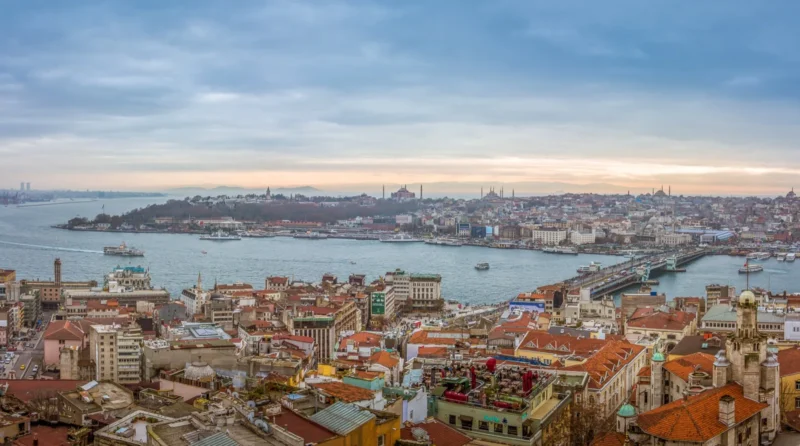
The Historic Peninsula across the Golden Horn, seen from Galata Tower in November 2014. Karaköy is in the foreground.
Photo: Juraj Patekar · Photo credits
Proportionally resized and WebP-compressed; the existing published image frame is preserved. No additional cropping, retouching or recolouring.
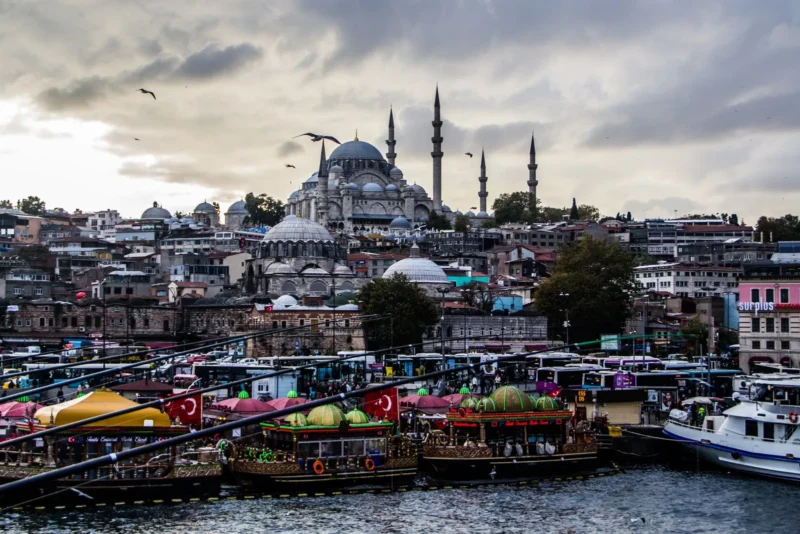
At Eminönü, the historic peninsula begins with ferry passengers, tram bells and people carrying their shopping home. Above the waterfront, Süleymaniye gives the skyline its great rising shape. Farther inland, a Byzantine church survives as a neighbourhood mosque; towards the western boundary, towers and gateways reveal how large the old city really was.
Sultanahmet belongs to this landscape, but it is only one part of it. Suriçi means “inside the walls”. In Istanbul, the name describes the historic peninsula south of the Golden Horn, where Byzantium, Constantinople and the Ottoman capital developed.
Its appeal is the relationship between extraordinary buildings and the streets that still surround them. A visit can begin with imperial history and end over a glass of boza, or concentrate on a market and leave the palace for another time. The useful decision is which part interests you today.
Trying to collect the entire peninsula in one outing leaves little time to understand any of it.
Finding your bearings
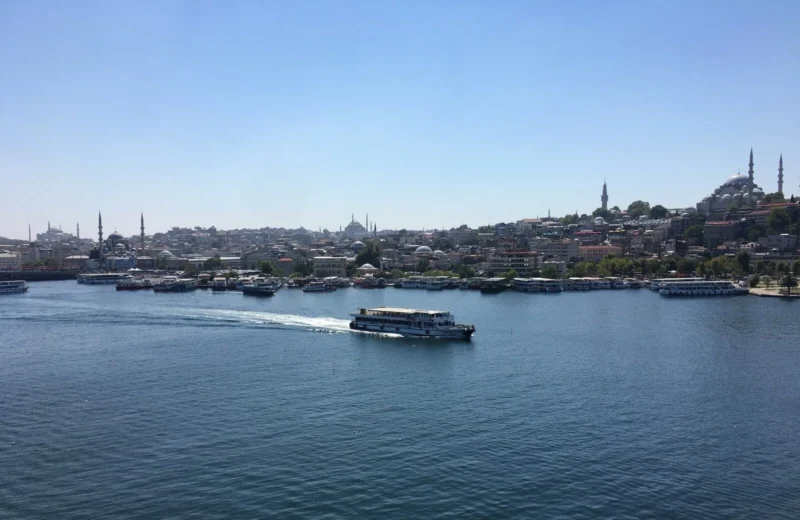
Water marks three sides: the Golden Horn to the north, the Bosphorus at the eastern tip and the Sea of Marmara to the south. The land walls define the western edge. The area broadly corresponds to today’s Fatih district.
Karaköy and Galata, across the Golden Horn, are outside Suriçi, as is Eyüp beyond the walls to the northwest. Within that outline, several centres give the area its shape. Sultanahmet and the palace grounds occupy the eastern end.
Eminönü and Sirkeci face the water below them. The bazaar district rises inland towards Beyazıt; Süleymaniye and Vefa sit farther west, followed by Zeyrek and the neighbourhood around Fatih Mosque. Fener and Balat follow the Golden Horn shore, while Edirnekapı and Yedikule belong to different ends of the western boundary.
UNESCO’s Historic Areas of Istanbul comprises four component areas, centred on Sultanahmet, Süleymaniye, Zeyrek and the land walls. The designation is more specific than a blanket label for every street in Fatih, and a useful reminder to look beyond the eastern monuments.
Sultanahmet and the palace quarter
Sultanahmet is the clearest introduction to the peninsula’s imperial scale. The former Hippodrome, Hagia Sophia and the Blue Mosque stand close together; Topkapı’s extensive grounds lie beyond. Choose the interior that most interests you before adding another ticket.
For practical planning, see Topkapı visitor information from National Palaces. For Hagia Sophia, the Culture Ministry’s January 2024 announcement explains the separate sightseeing gallery. Confirm current admission and access before visiting.
A palace visit asks for a different amount of attention from a pause in a mosque courtyard. There are other ways into this part of the city. The Turkish and Islamic Arts Museum, in the Ibrahim Pasha Palace beside the Hippodrome, rewards an interest in carpets, manuscripts and craftsmanship.
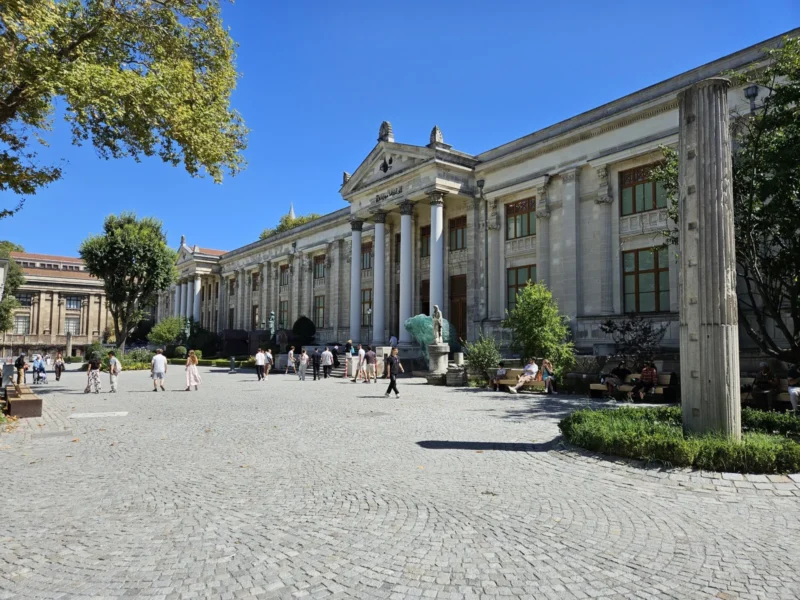
The Istanbul Archaeological Museums, near Gülhane, widen the subject beyond the city itself. Check which buildings and galleries are accessible when planning a dedicated visit. Gülhane provides breathing space between the museum and palace quarter and the streets towards Sirkeci.
Beneath Sultanahmet, Yerebatan Sarnıcı, the Basilica Cistern, reveals the infrastructure behind the imperial city. Built under Justinian in the sixth century, this columned underground reservoir supplied the Great Palace and surrounding buildings. It makes a distinctive alternative to another palace or museum interior. Check the current admission options and opening hours before going; daytime and evening arrangements can differ.
For the seasonal hours change effective 15 November 2026, see the Basilica Cistern visiting-hours notice from TÜRSAB, which relays the operator’s announcement.
For detailed monument choices, use our architecture guide and Three days in Istanbul; here, Sultanahmet is one possible centre for exploring Suriçi, rather than the whole programme.
Eminönü and Sirkeci
Eminönü is the peninsula’s busy waterfront entrance. The southern end of Galata Bridge, ferry piers and New Mosque make useful reference points. Behind them, the Spice Bazaar and surrounding trading streets draw the visit inland.
The Grand Bazaar is a separate destination uphill near Beyazıt, not another name for the market beside the water. Sirkeci lies along the eastern side of this waterfront cluster, between Eminönü and the approach to Gülhane. It works well as an arrival point, especially if you want to decide between the palace quarter and the shopping streets after getting here.
Choose this part of Suriçi for browsing and the everyday movement of a trading district. Leave time outside the covered bazaars as well as inside them. A han is a historic commercial building, often arranged around a courtyard, but a visible entrance does not guarantee public access to every floor.
Respect working premises and do not follow informal invitations onto unverified rooftops.
Süleymaniye and Vefa
From the Golden Horn, Süleymaniye appears to gather the hillside beneath it. Up close, Sinan’s sixteenth-century mosque sits within a much larger complex. The courtyard, surrounding buildings and outlook towards the water help explain why it belongs so strongly to the city’s skyline.
This is a good choice when you want one substantial monument without making the day a succession of admissions. Give the approach and the exterior space proper attention. Historically, a külliye combined worship with functions such as education and care; its different buildings should not all be assumed to share the same visitor access today.
Vefa brings the scale back towards streets and small businesses. Vefa Bozacısı, founded in 1876 according to the family firm’s history, offers a specific reason to come this way. Its boza is a thick, lightly sour fermented grain drink, quite different from tea or coffee.
Try it because you are curious, rather than expecting an ordinary refreshment. Towards Saraçhane, the Bozdoğan Aqueduct, also known as the Aqueduct of Valens, gives the city’s water infrastructure a conspicuous presence above street level. Together, these places make a rewarding introduction to the peninsula beyond its palace quarter.
If a bath is part of your visit, our hammam booking guide compares admission, scrub and massage, with practical notes for Cağaloğlu and Zeyrek as well as Kılıç Ali Paşa across the Golden Horn.
Zeyrek and the neighbourhood around Fatih Mosque
Zeyrek offers a closer encounter with the city’s changes of use. Molla Zeyrek Mosque incorporates the churches of the Byzantine Pantokrator monastery complex. Its brickwork and grouped forms make an instructive contrast with the Ottoman imperial mosques, even when you only see the exterior.
The surrounding residential streets matter too. UNESCO’s recognition includes the neighbourhood setting, not simply an isolated monument. Look at how houses, slopes and the mosque sit together, while remembering that people live behind the doors you pass.
Farther inland, Fatih Mosque gives another neighbourhood its focus. Mehmed II’s original fifteenth-century foundation established a major religious and social complex; the present mosque reflects rebuilding after the earthquake of 1766. That distinction helps avoid reading every part of the building as an unchanged survivor of the conquest period.
Choose Zeyrek and Fatih for a visit centred on urban history and neighbourhood life. They make more sense with time for the surrounding streets and a meal than as quick detours squeezed between Sultanahmet and Balat.
Fener and Balat by the Golden Horn
Fener and Balat draw attention to the peninsula’s communities as well as its monuments. Fener is associated with the Ecumenical Patriarchate and the Church of St George. The prominent red building on the hillside is the Greek school, not the patriarchal church.
Knowing that before arriving makes the view much easier to understand. Balat’s history includes a substantial Jewish community, reflected in surviving synagogues, while churches and other religious buildings testify to the area’s varied past. This history deserves more attention than a search for coloured façades.
Religious premises may have particular visiting arrangements; an attractive exterior is not an invitation to enter. Yıldırım and Vodina streets provide a useful focus for cafés and browsing near the shore. Uphill, the terrain changes quickly, with steep streets and steps.
Staying closer to the waterfront is a reasonable choice if climbing would limit the pleasure of the visit. Photograph buildings without turning residents’ doorways into a set. Keep entrances clear, ask before photographing people and allow a café stop to be a café stop.
These are inhabited neighbourhoods, not an open-air display arranged for visitors.
The western walls and Edirnekapı
The land walls change your understanding of Suriçi’s size. This was a defended city with a substantial western boundary, not just a cluster of monuments around Hagia Sophia. The fortifications combine walls, towers and gateways, with surviving sections embedded in the modern city.
Near Edirnekapı, Kariye, also known as Chora, is a strong reason to make a separate journey west. Its Byzantine mosaics and frescoes offer a different focus from the larger eastern monuments. It functions as a mosque, so check the current cultural-visitor arrangements rather than relying on an old museum listing.
For the walls themselves, choose a defined section or visitor centre instead of assuming a continuous, accessible rampart walk. The municipal Mevlanakapı Visitor Centre is one possible starting point. Yedikule, towards the Marmara end, introduces another part of the defences and the fortress associated with them.
These are alternatives to choose between, not stops that must all fit together. Keep to designated public areas and do not climb damaged masonry or enter closed sections.
Food and shopping without a checklist
A meal is a good reason to remain in whichever part of the peninsula you have chosen. Look for a clear menu and a style of cooking you want: a lokanta with prepared dishes, a bakery for something small, or a longer restaurant lunch. Ask about ingredients and prices before ordering, particularly if you have dietary requirements.
For shopping, decide whether you want food, textiles, a useful household object or simply time to browse. Eminönü and the Grand Bazaar suit different kinds of looking, and neither obliges you to buy. Check the unit price for goods sold by weight, ask about materials and provenance, and agree the total before paying.
Our shopping guide goes further into choosing what to bring home.
Getting around and visiting well
Use transport to reach the part of Suriçi you want to explore, rather than treating every neighbourhood as an extension of one long walk. The T1 tram serves Eminönü, Sirkeci, Gülhane, Sultanahmet and Beyazıt–Kapalıçarşı. The T5 follows the Golden Horn from Eminönü through Cibali, Fener, Balat and Ayvansaray.
The M2’s Vezneciler station is useful for approaching the peninsula inland; Marmaray serves Sirkeci and Yenikapı. Check the station exit and final approach as well as the line itself. The T1 stop named Topkapı is by the western part of the city, not beside Topkapı Palace.
Hills, uneven paving and busy crossings deserve attention. The route from a step-free station to a historic building may still include steps. Check essential lift access and venue facilities separately, and leave a little flexibility for weather or a longer rest.
In working mosques, worship takes priority. Follow local instructions about clothing, footwear, photography and visitor areas; Friday arrangements can differ from other days. Churches and synagogues have their own requirements.
Opening times, admission and restoration access can change, so check official information before a dedicated journey. Suriçi rewards returning with a different interest. One visit might be about a palace; the next about a market, a hillside mosque or the walls.
Each adds another piece to the same city.
Selected practical details checked on 10 November 2026: Kariye’s mosque status and published visitor-access guidance, and the T1 stops described here. Confirm current access and services before travelling.
Archive photographs; check current access and restoration arrangements before visiting. All photographs are displayed proportionally and uncropped; credits and licences are shown when enlarged.