Introduction
Istanbul's buildings become more interesting when you look at what they were designed to do. A dome gathers people into a shared space. A palace gate decides who may go farther. A cistern keeps a city supplied with water. A bank announces the importance of the business inside.
You can follow those ideas without knowing architectural terminology or visiting every famous monument. Choose a question that interests you, then give two or three buildings enough attention to answer it. The comparison might happen over an afternoon or across several visits to the city.
This is a guide to looking: at structure, setting and the changes a building carries with it. A few dates help, but the most useful thing to bring is a willingness to pause before moving on.
Begin with the skyline
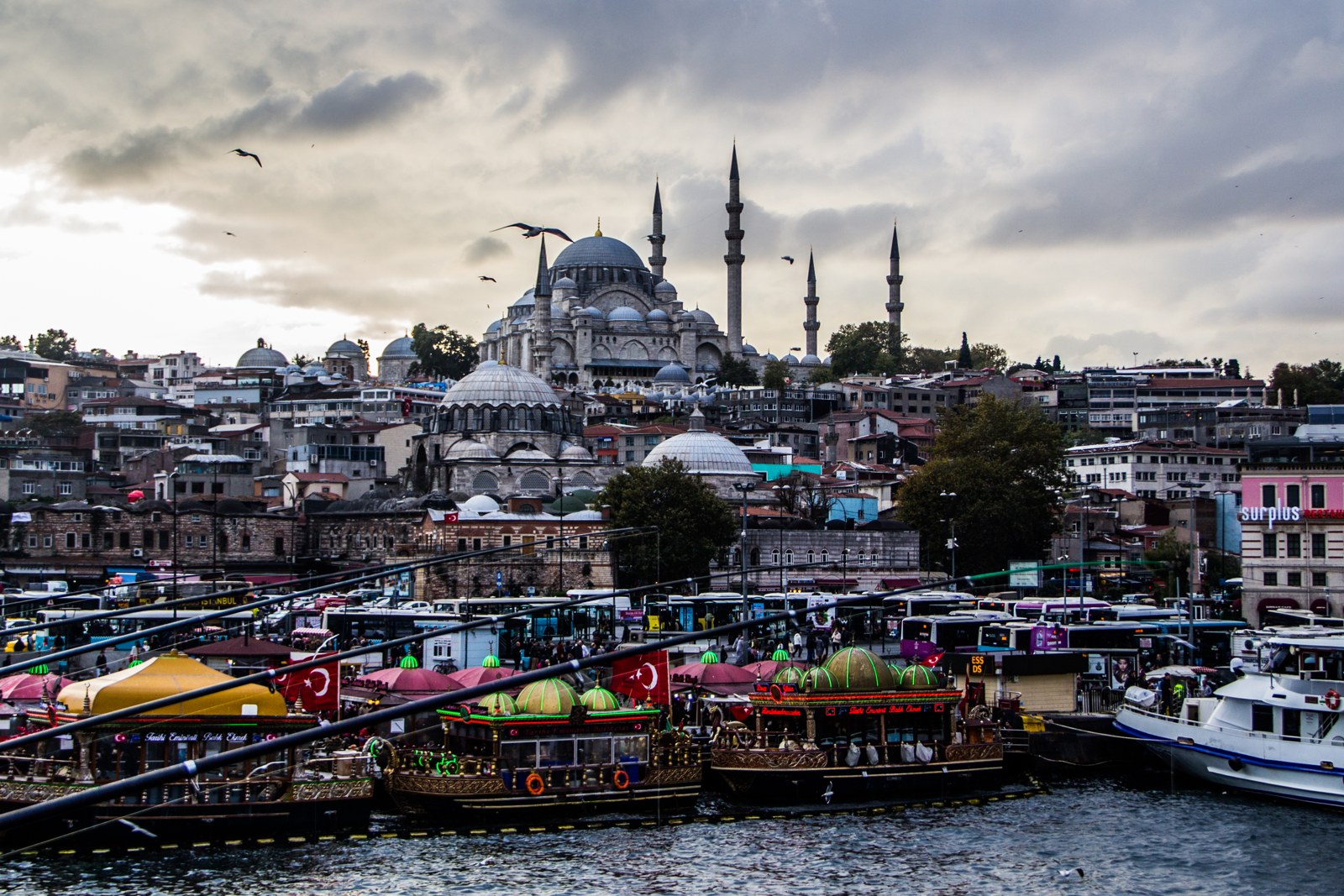
Before looking up at a building from its entrance, try seeing it from farther away. The Historic Peninsula's domes, minarets and waterfront slopes show how much the city's major monuments depend on their setting. Süleymaniye makes a particularly clear example: its position above the Golden Horn gives the complex a presence well beyond its immediate streets.
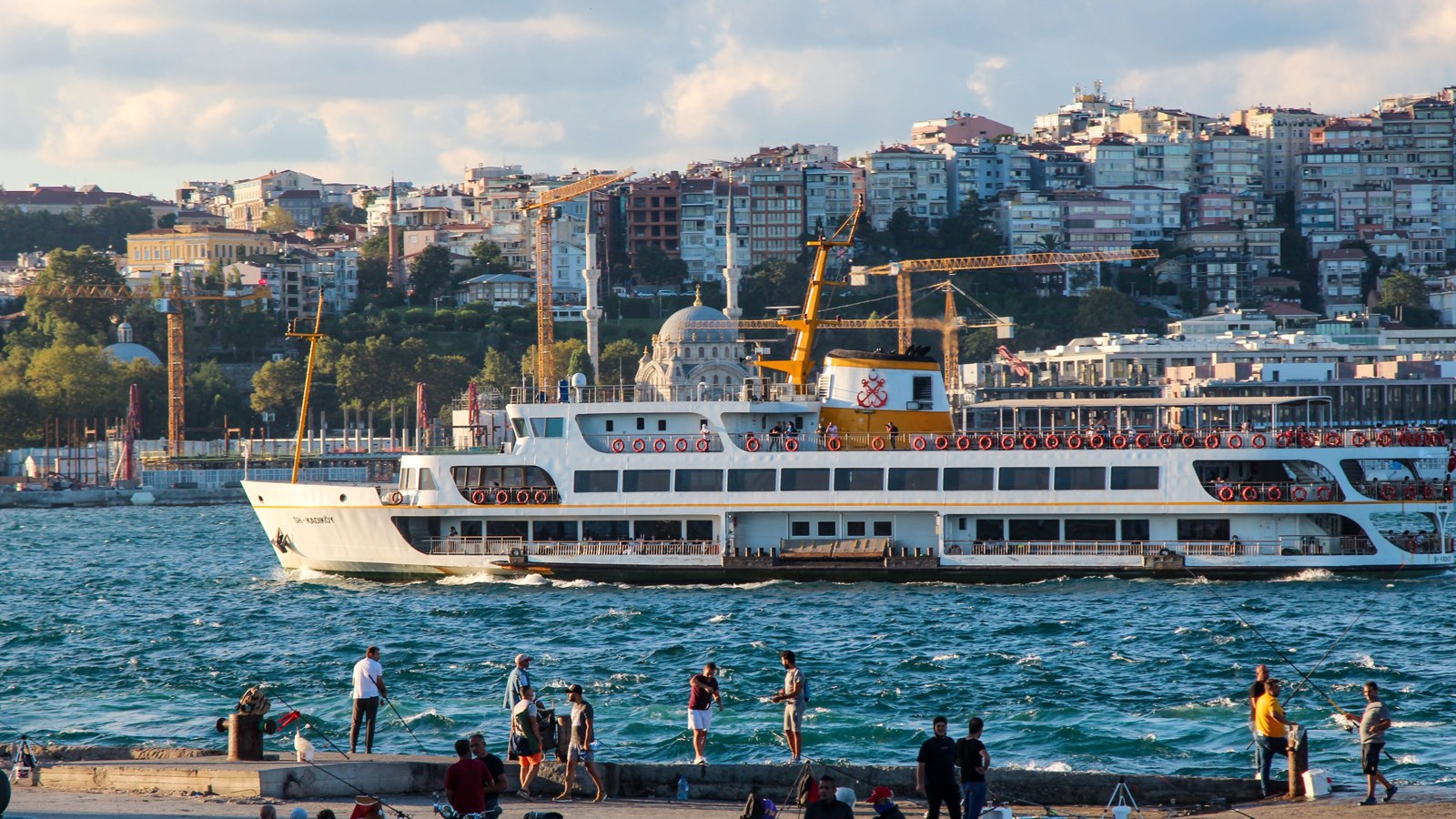
A view from the opposite shore or from a ferry helps you locate the large forms. Then, when you reach a courtyard, you can compare the building seen from the city with the building experienced at walking pace. What looked like one silhouette separates into walls, domes, entrances and supporting structures.
That change in scale is a useful habit everywhere in Istanbul. Look first at the whole, then at the route into it, then at a detail you can hold in your memory.
Hagia Sophia and a changing interior
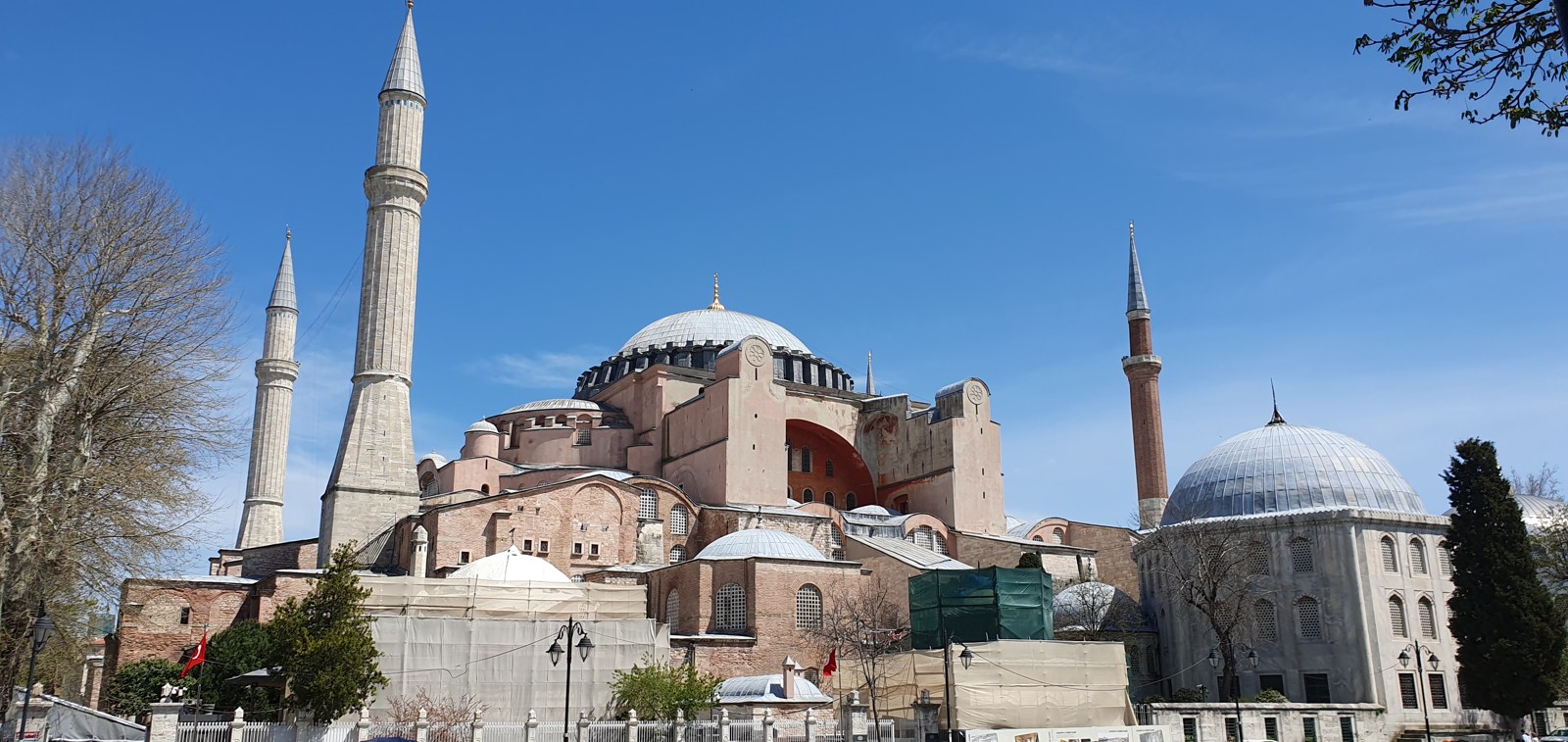
Hagia Sophia's sixth-century church was built under Emperor Justinian, with Anthemios of Tralles and Isidoros of Miletus as its designers. Its central dome is the obvious starting point, but look at how the surrounding arches and curved surfaces carry your eye toward it. The experience of a large open interior depends on a great deal of structure around it.
The building also asks you to look across time. Christian mosaics and Ottoman additions belong to different periods of its history. Avoid treating everything visible as part of a single original design, or assuming that later work is simply background to the oldest fabric.
Hagia Sophia is an active mosque with a separate cultural-visiting arrangement. Worship access and sightseeing access should not be treated as interchangeable. Major conservation work has also been continuing, so an unobstructed version of the interior seen in older photographs should not be the basis of your expectations. Check the visitor arrangements and accessible route close to your visit, and follow the instructions at the entrance.
If architecture is your main interest, ask a simple question as you look: how does such a large volume feel held together? You do not need a complete technical answer for the visit to become more rewarding.
Süleymaniye and the mosque complex
Sinan's Süleymaniye Mosque, built in the sixteenth century for Sultan Süleyman, offers another way to think about a domed interior. Look at the relationship between the main dome, the subsidiary forms and the light entering the prayer space. Then compare that impression with the building's stepped outline outside.
Just as important is the word külliye: a complex of buildings with related religious and social functions. Süleymaniye included schools, a hospital, kitchens and other facilities. The mosque was part of a wider system of learning, care and daily life.
You do not need access to every surrounding building to understand the point. Notice the complex's scale, its boundaries and its connection to the neighbouring streets. Some spaces have different present-day uses or access arrangements; being historically part of the complex does not make them all freely visitable.
Give the courtyard and the approach some of your attention, rather than making the prayer hall the entire visit. For an architecture-focused outing, Süleymaniye can easily be the main event, followed by a meal nearby and a walk at your own pace.
Sultanahmet beyond the blue tiles
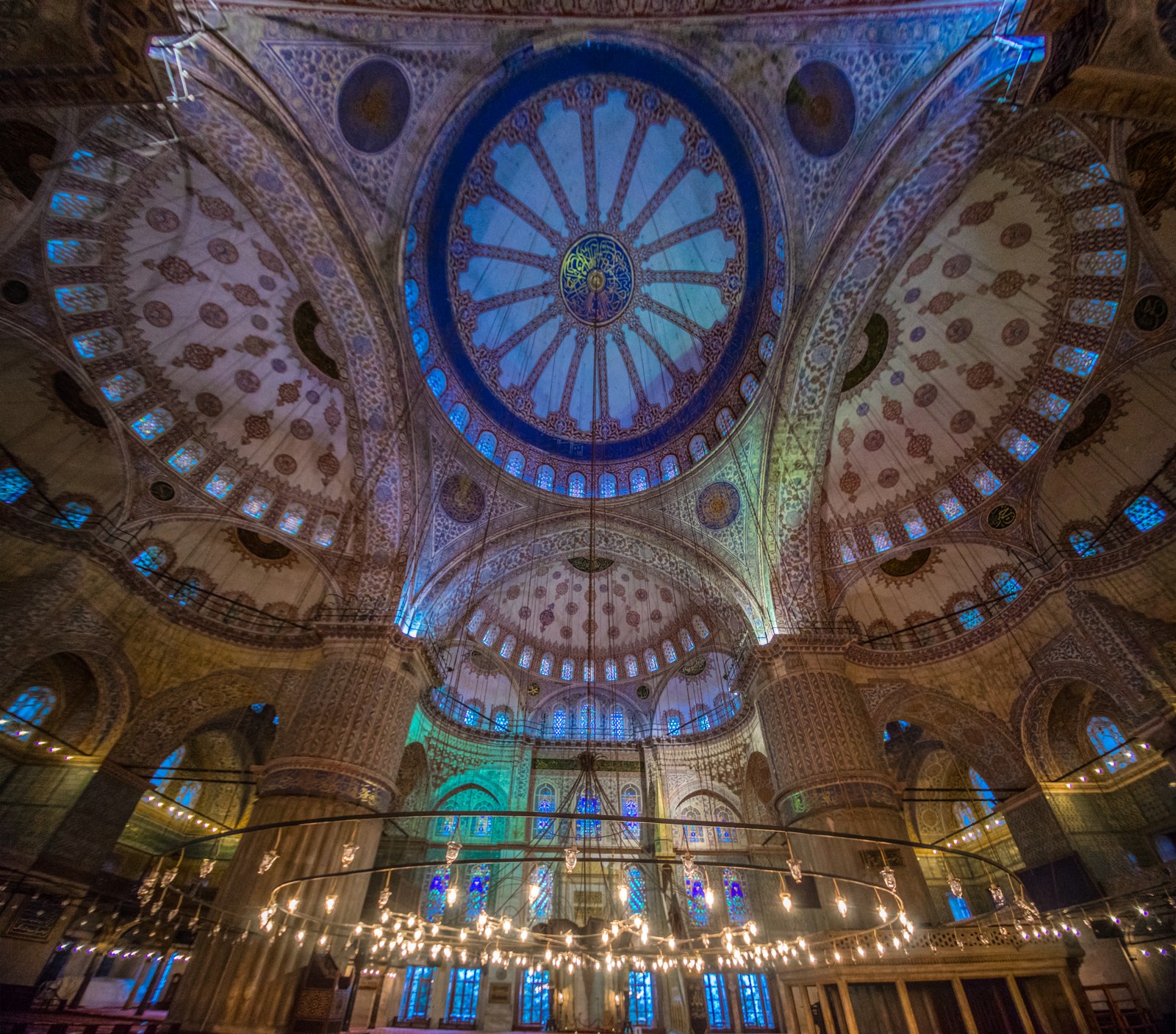
The Sultan Ahmed Mosque, widely known as the Blue Mosque, belongs to the early seventeenth century and was designed by Sedefkâr Mehmed Ağa. Its popular name draws attention to the tiles, but there is more to see than one colour or decorative surface.
From outside, look at the progression of domes and the way the minarets frame the building. Inside, notice the difference between the overall scale and the smaller repeated patterns. Try spending a moment with each before reaching for a camera. Architecture is experienced by moving and looking in different directions; a photograph of the ceiling captures only part of it.
This remains a working mosque. The mosque's visitor rules explain the separation of worship and visitor areas and specific restrictions, including its Friday visiting arrangements. Dress modestly, follow footwear instructions and give people praying the privacy and quiet they need. The timetable for worship takes priority over a sightseeing plan. Official information ↗
Two palaces, two ways of organising power
Topkapı and Dolmabahçe make a useful comparison, even if you visit them on different trips. Their layouts reveal contrasting approaches to court life and ceremony.
Topkapı and its courtyards
At Topkapı, pay attention to the sequence of spaces. The palace developed through additions over centuries, and its courts and separate buildings make movement part of the experience. A threshold is worth noticing: what lies beyond it, and how does the space change as you pass through?
The Harem is important to understanding the palace's residential organisation, but it is one part of a much larger complex. Do not let a single collection or room turn the rest into corridors you hurry through.
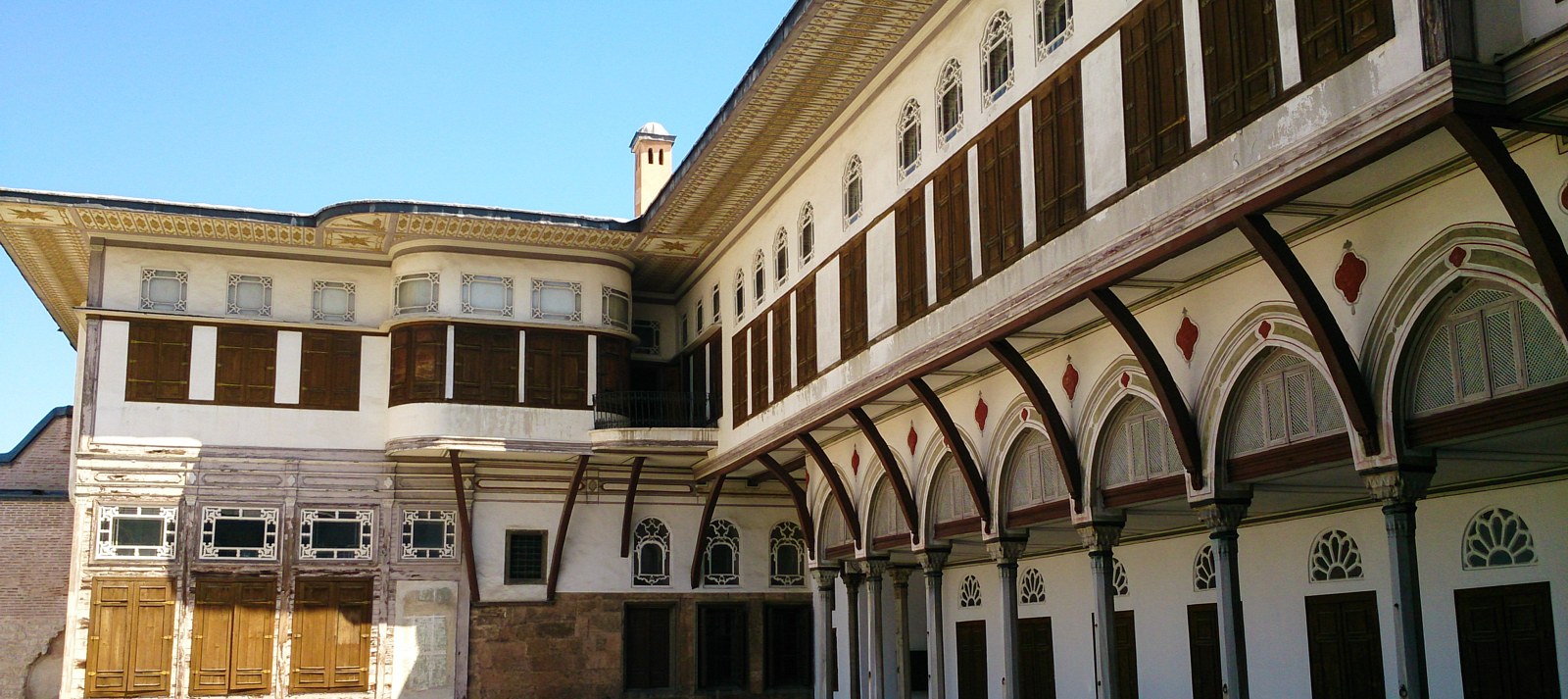
Give Topkapı a substantial part of the day. Check the National Palaces visitor page for access information; its regular closing day is Tuesday. Confirm which sections your chosen ticket includes and allow for restoration-related changes to the route. Official information ↗
Dolmabahçe and the waterfront
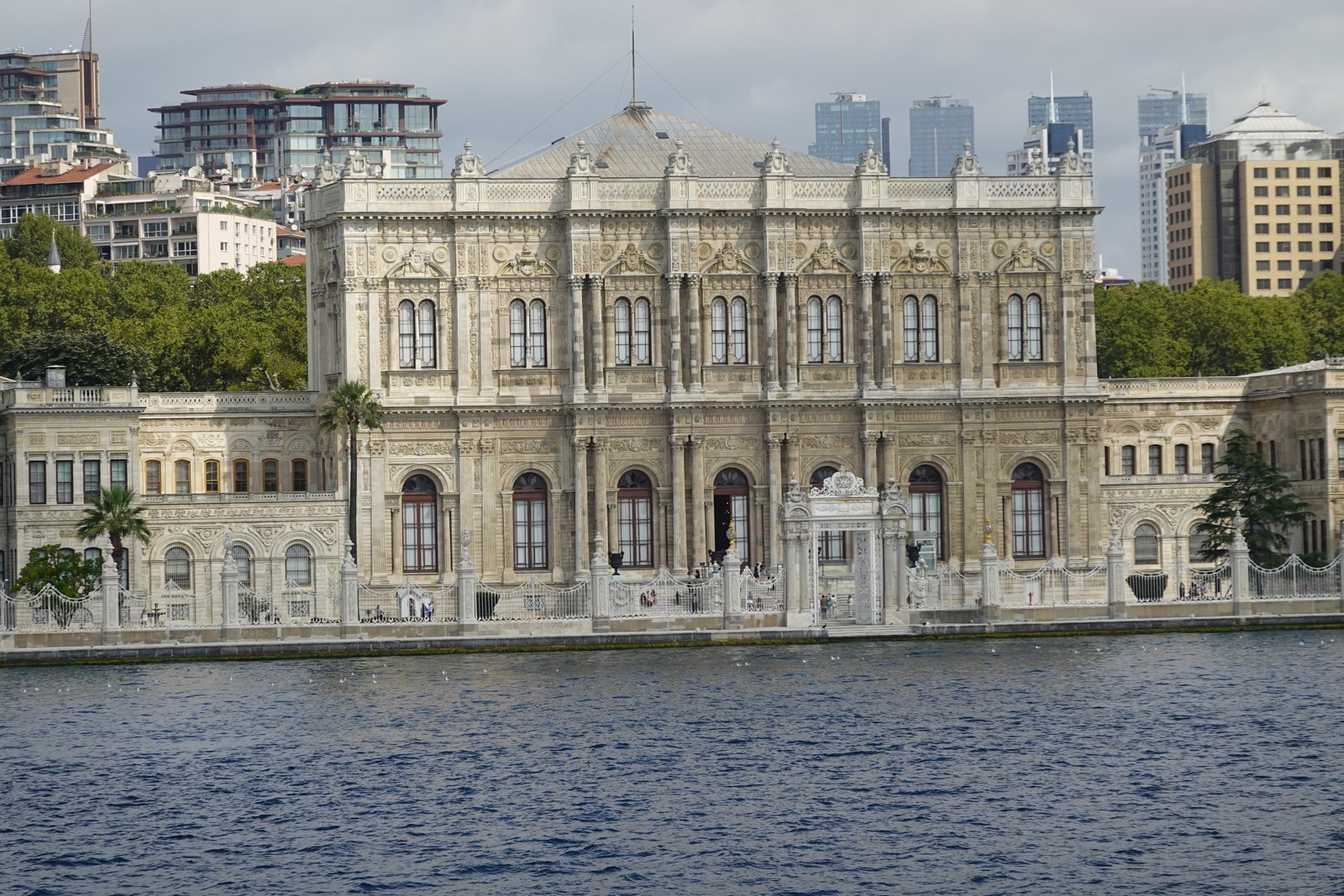
Dolmabahçe's long Bosphorus-facing building presents a different composition. Used by the Ottoman court from 1856, it brings together administrative, private and ceremonial spaces within a large connected palace. Its decoration combines Ottoman traditions with Baroque, Rococo and Neoclassical influences.
Look beyond the abundance of ornament to the organisation underneath. How are rooms grouped? How does a ceremonial space differ from a private one? What changes when a palace presents such an extended frontage to the water?
The official Dolmabahçe page lists Monday as its regular closing day. Check the current ticket and visiting arrangements rather than assuming they match Topkapı's. Seeing both palaces can be illuminating, but putting them back-to-back is rarely the best way to appreciate either. Official information ↗
The Basilica Cistern and the city’s water
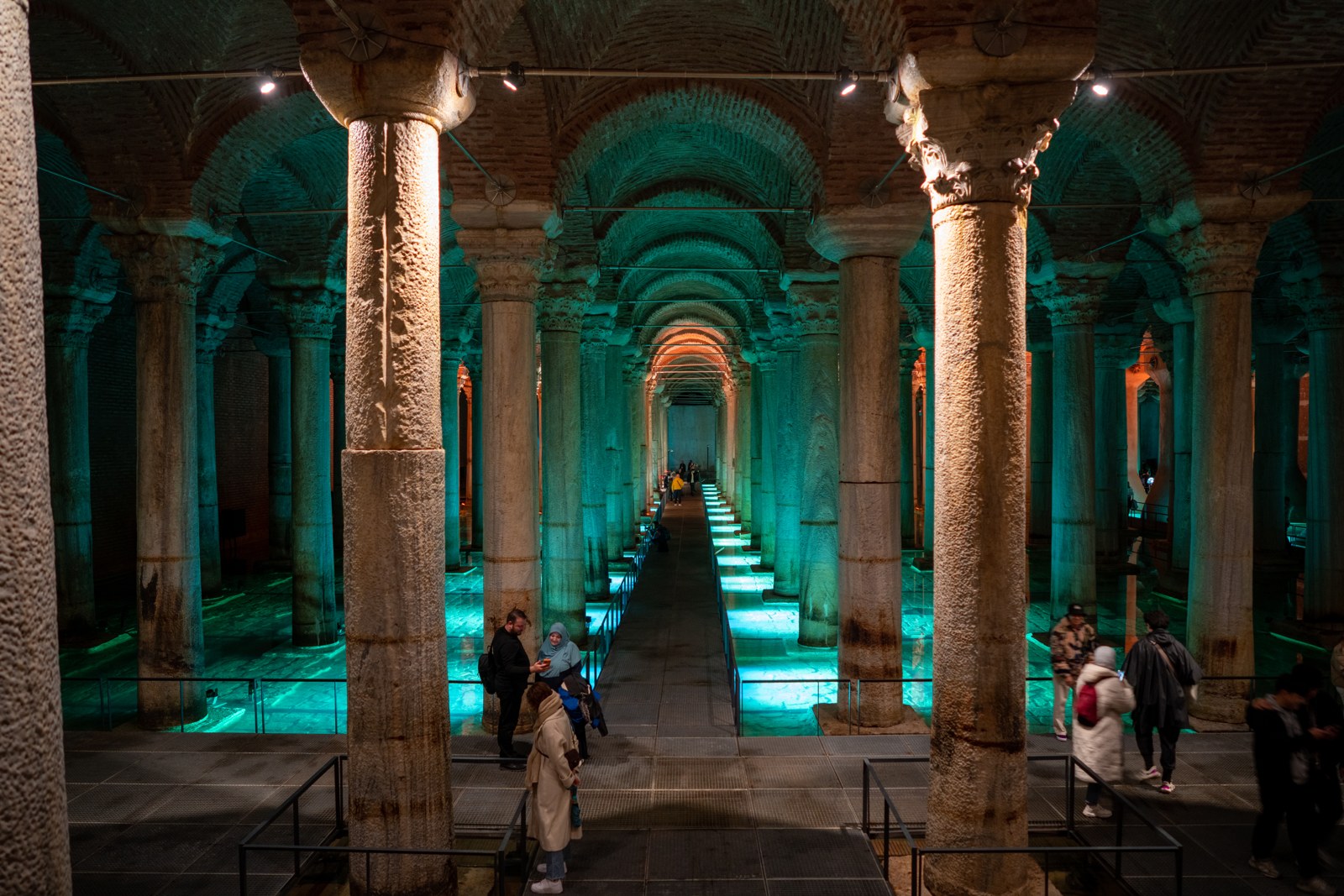
The Basilica Cistern, or Yerebatan Sarnıcı, shifts the subject from worship and court ceremony to water storage. Built in the sixth century under Justinian, its roof is supported by a regular grid of 336 columns. Many of those columns are understood to have come from earlier buildings.
Look at repetition and difference together. The grid gives the space its order; variations in individual elements tell another part of the story. Reusing building materials was a practical act as well as something a modern visitor may find visually striking.
The lighting and visitor walkways shape how the structure is experienced today. Keep that modern presentation separate in your mind from the cistern's original purpose. It was infrastructure serving a living city.
Confirm current admission and session arrangements before going. If stairs, low light or standing in a queue would affect your visit, establish the available access route first. Do not rely on an older photograph or another visitor's account to settle those questions.
Bankalar Caddesi and commercial history
Historic Istanbul also includes places built for money, trade and administration. Bankalar Caddesi in Karaköy offers a change of emphasis after the monumental religious and palace sites.
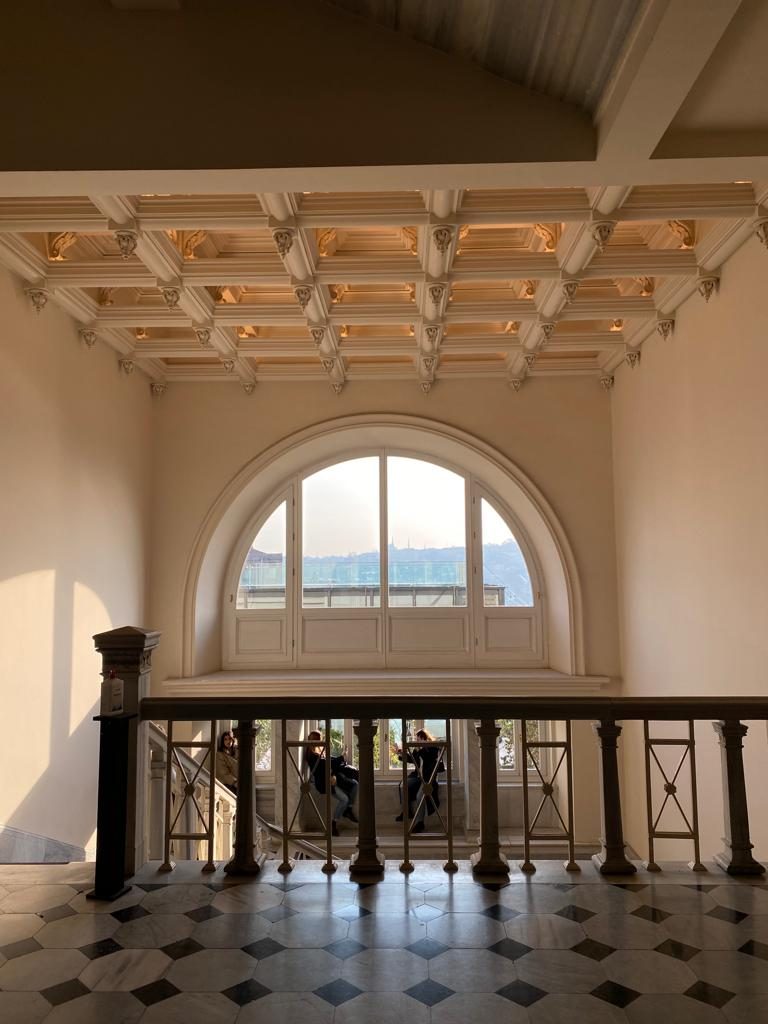
Salt Galata occupies the former Imperial Ottoman Bank headquarters, designed by Alexandre Vallaury in the nineteenth century. Its present use as a cultural and research institution lets you consider both the original building and its adaptation. Notice how a formal street frontage relates to the interior spaces you can enter, and where contemporary circulation and facilities meet older fabric.
Salt's visitor page gives current opening and holiday information. Admission is free, with regular opening from Tuesday to Sunday. Treat research areas as working spaces and respect any access boundaries. Official information ↗
Make comparison your guide
For a focused outing, choose one idea: domed space at Hagia Sophia and Süleymaniye; court life at the two palaces; or the reuse of historic buildings around Karaköy. These are themes to explore, not a demand to see every site in one day.
Leave room for the parts between monuments: a doorway, a sloping street, the view that opens at the edge of a courtyard. You will start to notice how buildings meet the city, and how the city has continued to change around them. That is when Istanbul's architectural history becomes something you can read for yourself.
Opening times, admission and transport services can change. Check the linked official information before making a dedicated visit or booking.