A day in Beykoz
Palace glass and factory memories tell two different stories of making things. A day among Beykoz’s collections and trees, with room for either one visit or both.
Before you go
- Time needed
- Allow most of a day from central Istanbul; visit one venue if you prefer a shorter outing.
- Glass Museum
- Closed Mondays; ticket office 09:00–17:00. Foreign adult admission 500 TL.
- Museum address
- Merkez Mahallesi, Mehmet Yavuz Caddesi 115, Beykoz.
- Kundura
- Kundura requires a confirmed reservation. English exhibition text and interview translations are unconfirmed; ask when booking.
Practical information checked:
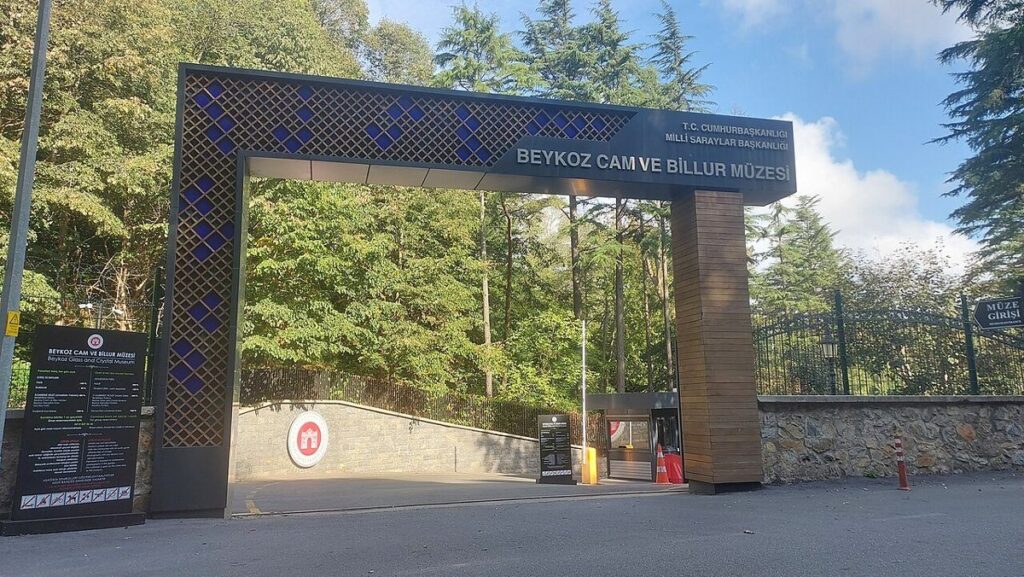
Beykoz Glass and Crystal Museum entrance, 2025.
Photo: İmmortalance · Photo credits
Two histories of making things
Beykoz holds two collections devoted to things Istanbul made. At the Glass and Crystal Museum, Turkish glass sits alongside European pieces made for Ottoman palaces. At Kundura, machines, family photographs and workers’ accounts trace the life of a leather and shoe factory. Decorative arts and working lives give this part of the northern Bosphorus a particular interest.
The glass museum’s wooded grounds are another attraction, with space to spend part of the visit outdoors. The restored estate and Kundura’s surviving workshops give the two collections settings closely tied to their subjects.
Allow most of a day from central Istanbul. Make the Glass and Crystal Museum your anchor. Add Kundura only with a confirmed exhibition slot; if you depend on English, ask what English-language interpretation will be available before committing to the pairing. Its oral histories and detailed text are central to the appeal, and English access has not been confirmed. The glass collection and grounds also work as a visit on their own.
Glass in a former stable
The museum occupies the restored stable building of Abraham Pasha’s nineteenth-century estate. That distinction matters: this is not a factory preserved with its furnaces in place. The stone building now gathers Turkish glass alongside European pieces made for Ottoman palaces, bringing different workshops and traditions into the same collection.
Colour, decoration and silhouette are good starting points in the galleries. A familiar vessel can become an elaborate display piece through the way its glass is shaped and finished. Comparing those details across the Turkish and European works makes the collection approachable even without specialist knowledge.
There is another kind of collecting outside. Abraham Pasha planted his estate with trees and plants brought from elsewhere; the grounds remain part of the museum’s appeal. Allow time to explore the grounds as well as the galleries, especially if the estate’s planted landscape interests you.
The National Palaces visitor page lists Monday closure, ticket-office hours of 09:00–17:00 and foreign adult admission of 500 TL. Müzekart does not cover this museum. Check holiday exceptions and any concession you intend to use before travelling; ticket-office closing time is not a sensible arrival target.
Kundura: the factory as a community
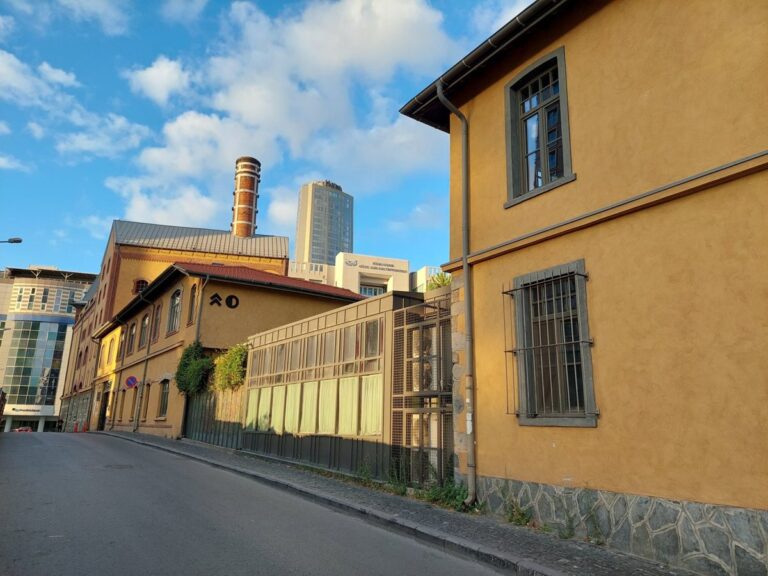
The former Sümerbank leather and shoe factory is the setting for Kundura’s Memory: A World Fit into a Factory. Workers’ relationships and daily lives are central to the exhibition.
It occupies the former carpentry workshop and draws on surviving machinery, photographs, documents, objects donated by workers and families, and oral-history interviews. These personal contributions bring the factory’s working community into the exhibition.
The factory’s former nursery now houses an archive built in part from the recollections of workers and their families. The archive is separate from the exhibition.
The memory exhibition is free, with advance registration for each visitor. Official pages have not always agreed on hours, so use the visit time confirmed through your reservation. Ask specifically about English exhibition texts and interview translations when booking, rather than relying on the language of the booking page.
A reservation is for the exhibition, not unrestricted access to the filming locations or the entire complex. Cinema and performance programmes are separate visits with their own booking requirements. The venue also asks visitors to reserve its restaurants and cafés separately.
Leave room between the collections
The two venues have separate entrances: the Glass Museum is at Mehmet Yavuz Caddesi 115; Kundura is at Süreyya İlmen Caddesi 1, Yalıköy. A late-morning museum visit leaves time for lunch and the transfer before an afternoon exhibition slot.
A taxi from the museum entrance is the simplest transfer. Check the entrance-to-entrance driving route and allow about 45 minutes for arranging pickup and making the transfer. This is spare time in the plan, not a guaranteed journey duration.
If you prefer to walk, inspect the pedestrian route and its current estimate first. The link follows neighbourhood streets. Check slopes and pavement conditions if those affect your plans.
Use Kundura’s transport information for the approach, then check İETT departures at Kundura Fabrikası on your visit date. The 15T towards Üsküdar and 15BK towards Kadıköy are two options when running. For a boat return, check the Şehir Hatları timetable and allow time to reach the public Beykoz pier. The exhibition booking includes neither a ferry nor a shuttle.
Which version belongs in your trip?
Choose the full pairing if decorative arts and industrial memory both interest you. If your attention lies with objects and gardens, stay with the Glass Museum and a leisurely meal. If working lives and reused industrial buildings are the stronger draw, make Kundura the purpose of a separately booked outing.
Beykoz asks more travel time than Üsküdar and Kuzguncuk. It is most worthwhile when the glass collection or the factory’s social history is a particular interest. For other choices, see our museums guide.
Visitor information reviewed: 23 November 2026. Confirm Kundura’s visiting time when registering.